


Spades Ace
4.845.00 Reviews
App Specs
- Version
- 0.0.7
- Updated On
- License
- Free
- Downloads
- 10,000+
- Developer
- SATORISYS PLAY
- Categories
- Card
- Platform
- Android
Screenshots
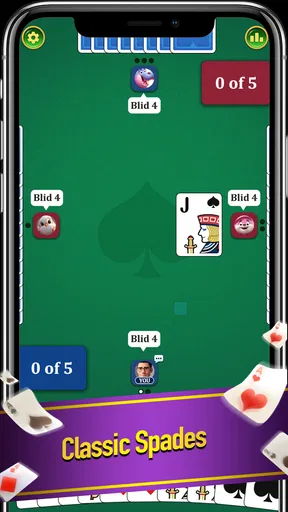
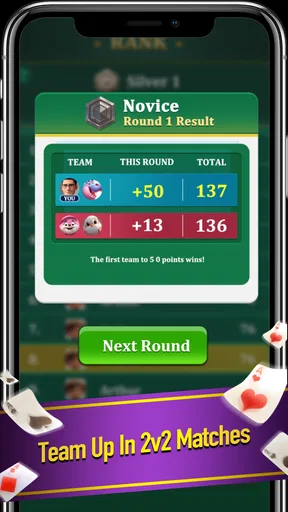
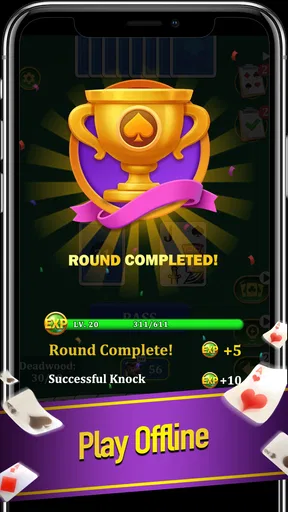
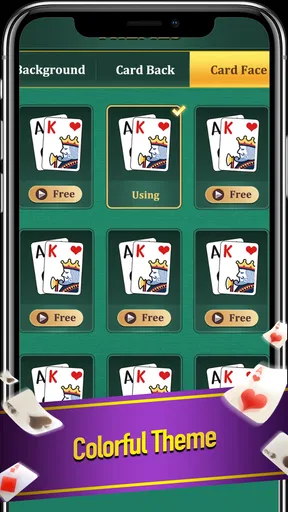

 Analysis by AppCompare
I approached Spades Ace as someone who enjoys card games but does not want a long tutorial before playing. Its appeal is easy to understand: this is a free mobile version of the familiar four-player team trick-taking game, built for people who like planning several moves ahead rather than simply tapping the highest card. My first impression was that the game’s identity is clear from the start. It is not trying to be a collection of unrelated card modes; it focuses on Spades and the decisions that make a partnership game interesting.
The game comes from SATORISYS PLAY and sits in the card-game category. It is rated Teen, which is worth noticing for families deciding whether it fits a younger player. The current version is 0.0.7 and it requires Android 9 or later. It is free to install, so trying a few hands is a low-commitment way to see whether its pace and presentation suit you.
What makes this particular release worth a look is its straightforward starting point. You do not need to learn a new fantasy setting, collect cards, or understand a complicated progression system before making your first decision. You deal with the logic of a classic Spades hand: estimate what you can win, communicate indirectly through your play, and avoid damaging your partner’s plan. That simplicity is also the main test. If you want a large collection of modes or a highly social platform, this may feel narrow. If you want a focused card table on your phone, the focus is useful.
Getting from the first deal to a meaningful win
I’d use this section to make the first hand feel manageable: rather than chasing a full-hand victory, I focus on one deliberate choice, such as protecting a likely trick or saving a trump for a genuine opening. That small success gives me a useful read on how bids, partners, and card timing fit together, and sets up a more confident second hand.
What the first few minutes are really like
A first-time player should think of the opening hand as a learning exercise rather than a test of perfect bidding. In Spades, the important early question is not “Which card looks strongest?” but “How many tricks can this hand realistically support?” A high spade can be valuable because spades act as the trump suit, yet a hand full of ordinary high cards can also create winning opportunities. The game becomes much easier once you stop judging cards individually and start considering combinations.
I recommend taking a moment to sort your thoughts before making the first play. Count your likely winners, notice how many spades you hold, and pay attention to suits where you have very few cards. A short suit can become useful later because it may let you play a spade after another player leads that suit. That kind of planning is more important than reacting quickly to every card on the table.
The team format changes the feeling completely compared with a solo patience game. Your result is connected to your partner’s decisions, but you cannot simply explain your plan during the hand. You have to read the cards that have already been played and infer what your partner may be holding. For a new player, that makes a small success—correctly covering a partner’s winning card or avoiding an unnecessary trump—feel more satisfying than a lucky high-card win.
Worth Reading Before You Choose

Flipboard Shows What News Apps Must Do Beyond the Feed

Switching to Android Auto Means Rethinking Your Driving Routine

Google Calendar Makes a Crowded Week Easier to Manage

Ludo King Makes the Most of the Minutes Between Plans

Baby Panda World Brings Quick Play to Modern Phones, but Its Game Library Feels Busy

ESPN’s Live Game View Makes Following Close Games Easier
The store rating is a 4.8 average from around 864 ratings, and the game has passed 10K+ installs. Those figures suggest that the focused concept has found an audience, but I would still treat the first session as a personal test. A strong score does not tell you whether you prefer this pace, the way the game handles turns, or the amount of information shown during play. Spend enough time to complete several hands before deciding.
A practical first-setup routine
Because the game requires Android 9 or later, I would check the device version before planning a casual match on an older phone or tablet. Once installed, the most useful preparation is not technical; it is mental. Have a basic understanding of trick-taking terms such as following suit, trumping, and bidding. If those ideas are new, the first round may feel confusing even though the rules themselves are familiar to card players.
For a first session, I would avoid treating every hand as a competition against the clock. Look at the cards, identify the suit that seems weakest, and decide whether your bid is conservative or ambitious. A conservative bid is often the better learning tool because it lets you observe how tricks develop without constantly trying to rescue an unrealistic target. The goal is to understand cause and effect: which lead exposed a weakness, which spade was spent too early, and when the partner’s card changed the safest line of play.
One useful habit is to remember the important spades that have already appeared. You do not need to memorize every card. Instead, track whether the strongest visible trump cards are gone and whether a remaining spade could still interrupt your planned winner. This is one of the first advanced habits that separates thoughtful play from simply choosing the largest available card.
Another practical choice is to keep your first session short enough that you can review it afterward. A hand can teach you more when you pause after the final trick and ask why the result happened. Did you overbid because you counted uncertain winners? Did you fail to create a void? Did you use a spade to win a trick that your partner could already have taken? These questions turn a free mobile game into a small strategy exercise rather than a sequence of disconnected taps.
How to reach the first successful action
The first meaningful success does not have to be winning the entire hand. For a beginner, it can be making one sound decision. Suppose you hold several cards in one suit but only one card in another. If an opponent leads the short suit later, you may be able to play a spade and take the trick. That possibility should influence your early choices. You might preserve that short-suit card instead of discarding it immediately, because its value is connected to what happens in future tricks.
When you lead, consider what information your play gives away. Leading from a long suit may force other players to follow and can help you discover how that suit is distributed. Leading a small card can also be intentional: it may allow a partner’s stronger card to win without using a trump. I found this more reliable than opening with the most impressive-looking card simply because it is high.
Following suit is where many first-time mistakes happen. If you can follow the led suit, you generally cannot choose a spade just because you would like to win. That rule is central to the rhythm of the game. When you cannot follow suit, your discard is not meaningless either. A low card may be safe, while discarding from a suit you want to void may prepare a later trump. The best discard depends on the remaining cards, not only on the current trick.
For a reassuring first target, try to make your bid without spending every strong card too early. If you bid two likely tricks, identify those two opportunities and protect them. Do not chase an extra trick merely because it is available if doing so could create penalties or interfere with your partner. This is a subtle trade-off: a spectacular individual trick can be bad for the team if it leaves the partnership unable to complete its combined plan.
In an everyday scenario, I can imagine playing a few hands during a commute break or while waiting for an appointment. The short, turn-based structure suits that kind of session because each decision has a clear place in the hand. I would not start a round when I knew I would need to leave immediately, since abandoning a partnership hand halfway through would make it harder to follow the developing strategy. But for a focused break, the game offers more mental engagement than a simple matching-card activity.
Confusion that can slow down new players
The biggest source of confusion is the difference between winning a trick and fulfilling the team’s overall bid. A player can take many tricks and still create a poor result by taking too many or by preventing the partner from reaching a target. In a partnership game, “more” is not automatically better. You need to think about the combined contract and the consequences of each extra win.
Another common mistake is assuming that every spade should be saved until the end. Spades are powerful, but their value depends on timing. A medium spade may be the right card to use when it protects a bid or prevents an opponent from taking a key trick. Holding every trump can leave you unable to act when the right opportunity appears. On the other hand, spending the strongest spade on a trick that was already safe wastes control. The useful question is not whether to use a spade, but what future problem that spade solves.
New players also tend to overlook the partner’s lead. If your partner leads a suit, that may provide a clue about the cards they want to develop or the suit they are trying to make you understand through play. You should not assume you can decode every intention perfectly, but you can avoid undermining it. If your partner has already shown control of a trick, do not overtake with a stronger card unless there is a clear reason, such as protecting the partnership from an opponent’s likely winner.
There is also a practical limitation to remember with a focused card game at this early version. Version 0.0.7 indicates a relatively early stage of development, so I would approach it with reasonable expectations rather than expecting the depth and polish of a long-established card platform. That does not make it unsuitable, but it does make the game better for someone who values the core Spades experience more than a large ecosystem of extras.
The Teen content rating is another reason to consider the intended audience before handing it to a child. A card game can look harmless, but the rating is part of the product information parents should check alongside the device and the player’s comfort with competitive play. For adults and older players who already know trick-taking games, the rating is unlikely to change the basic appeal. For younger children, I would choose an app whose age guidance is a closer match.
How it compares with familiar alternatives
Compared with a physical deck, the main advantage is convenience. You do not need three other people in the same room, a clear table, or someone willing to keep score. The phone handles the dealing and turn structure, which makes it easier to practice the logic of the game whenever you have a suitable moment. The trade-off is that digital play cannot replace the conversation and visible partnership signals of a real table. If your favorite part of Spades is joking with friends and negotiating plans aloud, a face-to-face game remains better.
Compared with broad card-game collections, Spades Ace is more specialized. A collection app is the better choice if you want to switch between solitaire, hearts, rummy, and other formats without installing another game. This one makes more sense when Spades is the game you actually want to play. Its narrow focus can reduce distraction, although it also means a player who loses interest in Spades may have little reason to return.
Compared with a purely solo puzzle game, the team trick-taking format asks you to manage uncertainty created by three other players. That makes each hand less predictable and gives experienced players room to improve. It can also feel less relaxing than solitaire because a bad bid or poorly timed card affects the whole partnership. I would recommend a solo alternative to someone who wants complete control and no pressure from a shared score.
The free price lowers the barrier to testing that trade-off. You can see whether the rules, turn rhythm, and presentation work for you without first committing to a purchase. Still, “free” should not be confused with universally suitable. The game is most valuable to people who already like the structure of Spades or are willing to learn it. Someone seeking a visually rich adventure, a fast reflex challenge, or a large multiplayer community should look elsewhere.
Small strategic habits that improve the second session
After the first hand, I would begin tracking distribution rather than only individual cards. If one player repeatedly fails to follow a suit, that player may be void in it, which changes the danger of leading that suit again. A void player can trump, so a seemingly safe lead may become an invitation to lose a trick. This is one of the non-obvious lessons that becomes visible once you stop watching only the card that wins.
I would also separate “certain winners” from “possible winners” when bidding. A high card is not always certain if a stronger card remains unplayed or if the suit can be trumped. A possible winner may become reliable only after the suit has been established or after the dangerous spades have been removed. Keeping those groups separate makes your bids less optimistic and helps explain why a hand that looked strong failed.
A third useful habit is to plan the order of your winners. Taking a sure trick immediately may be correct, but sometimes you should first draw out a suit or force an opponent to reveal a card. The best order depends on whether you need to protect a vulnerable card, create a void, or give your partner a chance to win. This is where the game rewards patience: the highest card in your hand is not necessarily the best first move.
If the game’s controls or table presentation ever make a choice feel unclear, slow down and inspect the available legal plays rather than tapping automatically. In trick-taking games, an accidental selection can change the entire hand. A deliberate pace is especially important for beginners because the interface may show what can be played, while the strategic reason for choosing one legal card over another still belongs to the player.
Who should install it, and who should skip it
I would recommend this game to someone who wants a free, focused way to play a classic team card game on a compatible Android device. It is a good fit for beginners who are willing to learn through several hands, as well as experienced Spades players who want a convenient practice table. The combination of partnership decisions, trump timing, and hand evaluation provides enough thought to make a short session feel worthwhile.
I would be more cautious about recommending it to someone who expects a broad feature set, extensive customization, or the social atmosphere of a live card night. The early version number makes it sensible to judge the core game first and treat any surrounding polish as secondary. Players who dislike losing because of a partner’s decision may also find the format frustrating, even when the rules are working exactly as intended.
My advice is to install it when you have time for more than one hand. Use the first round to learn the flow, the second to make a deliberate bid, and the next to focus on card counting and partner awareness. That progression gives the game a fair chance to show its strengths. If you finish those hands still wanting a different mode or a more social experience, a larger card collection or a real-world deck will probably serve you better.
My overall view is positive but measured. Spades Ace is strongest when you want the decisions of Spades without the preparation of a physical table. Its free entry, clear focus, and team-based strategy make it approachable, while the early version and specialized scope mean it is not designed for every kind of card player. For me, the best reason to keep it installed is not the promise of endless variety; it is the simple satisfaction of reading a hand correctly, supporting a partner through careful play, and turning a few ordinary cards into a well-earned trick.
Pros
- Smooth controls make card play easy on phones and tablets.
- Clear card visuals help you follow tricks without confusion.
- Quick matches suit short gaming sessions.
- Multiple difficulty levels accommodate newer and experienced players.
- Offline play is useful when you have no internet connection.
Cons
- The interface can feel dated compared with newer card games.
- Computer opponents may make predictable plays at times.
- Limited customization reduces long-term personalization.
- Ads may interrupt the experience for some players.
- Rules and scoring options may not satisfy every Spades variant fan.
FAQs for Spades Ace
What is Spades Ace and how is the game played?
Spades Ace is a digital version of the classic Spades trick-taking card game. Players compete in teams or individually, depending on the selected mode, and must predict how many tricks they will win before each hand. Spades are always trump, so timing, bidding accuracy, and cooperation with your partner are essential to achieving a high score.
Can I play Spades Ace offline or without creating an account?
Spades Ace may offer offline play against computer-controlled opponents, making it suitable for users who want a quick game without a constant internet connection. However, some features—such as online multiplayer, leaderboards, cloud progress, or social functions—may require an account or an active connection. Check the in-app requirements before starting a match.
Does Spades Ace include online multiplayer?
The multiplayer experience in Spades Ace depends on the version and features available on your device. If online play is supported, you can typically challenge other users, join public games, or play with friends. Connection quality can affect matchmaking and game stability, so a reliable Wi-Fi or mobile-data connection is recommended for competitive matches.
Is Spades Ace free to download and play?
Spades Ace can generally be downloaded at no initial cost, but availability of optional purchases, advertisements, or premium features may vary by platform and region. Free access may include the main card game while additional benefits—such as ad removal, cosmetic items, extra game modes, or virtual currency—could require payment through the app store.
What should beginners know before playing Spades Ace?
New players should first learn how bidding, nil bids, bags, and penalties work, because these rules strongly influence the final result. It is usually better to make realistic bids rather than overestimate a hand. Pay attention to cards already played, save high spades for important tricks, and coordinate carefully with your partner when team play is enabled.


